Official website links end with .gov.sg
A Singapore Government Agency Website


Secure websites use HTTPS


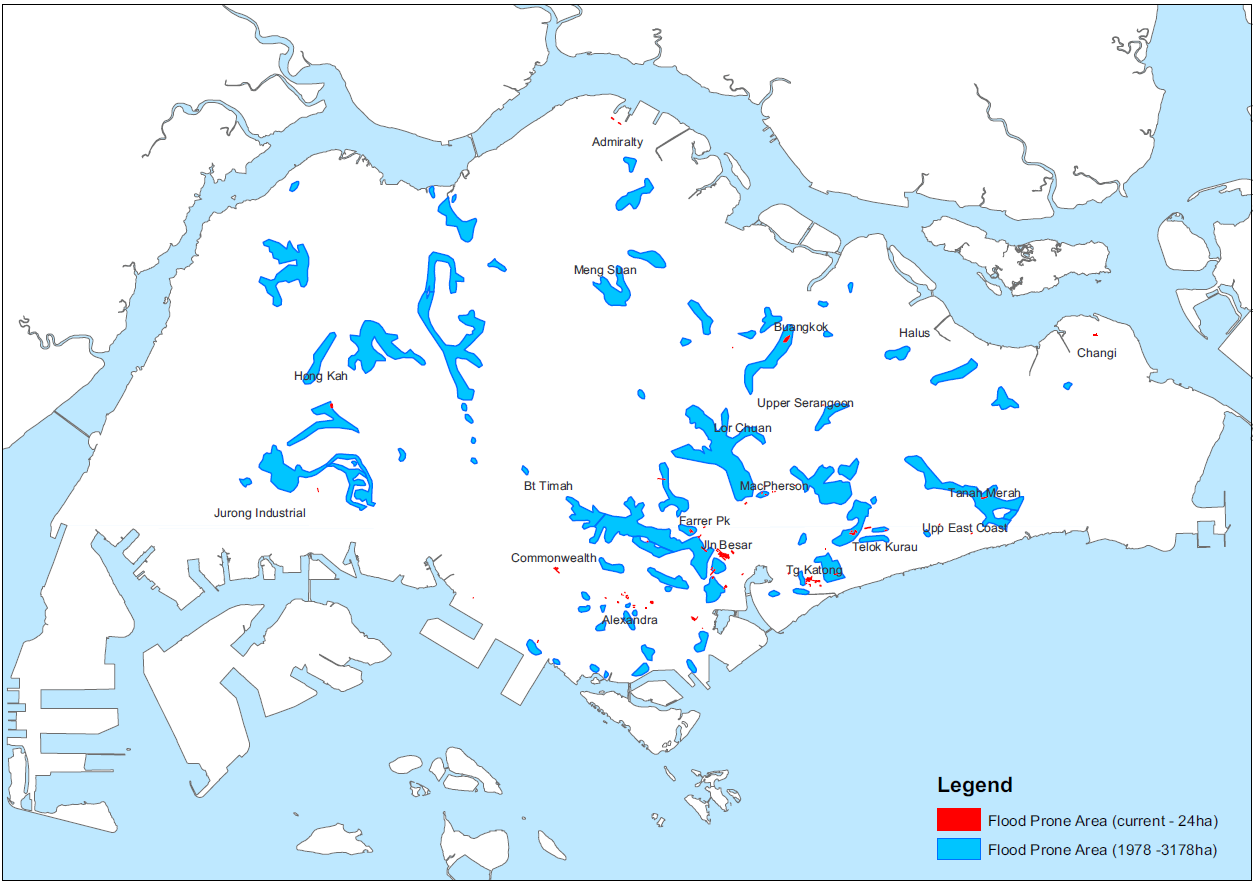
Check out the list of Flood-Prone Areas (as of Nov 2025)
Check out the list of Hotspots in Singapore (as of Feb 2026)An era of more wet and dry extremes
Climate change poses new risks to Singapore. According to the Third National Climate Change Study, Singapore is expected to become warmer, with annual mean temperatures rising between 0.6 and 5 degrees Celsius by end century. There will also be more hot days and warm nights.Changing rainfall patterns
Rainfall patterns in general will also become more erratic. We expect to see longer dry spells, as well as more frequent and intense storms in the future. These weather extremes could affect Singapore adversely. For instance, our roads might flood more often during intense rains, disrupting travel. During long dry spells, our gardens and parks might turn brown.Rising sea levels
Mean sea levels around Singapore are projected to rise by 1.15m by end century. This is partially due to the warming and expansion of ocean water, as heat gets absorbed by the oceans. In addition, warmer temperatures accelerate melting of polar ice caps, further increasing sea levels worldwide.Flash floods
In most instances, our drains can cope with the rain. However, there could be times when extremely heavy rainfall over a short period could exceed our drains’ capacity. This is when flash floods – small and localised floods that typically do not last for more than an hour – may occur.Coastal floods
Singapore generally experiences two high tides per day. From time to time, Singapore may also experience storm surges, which is when an intense low pressure at the centre of a storm meets strong winds. These storm surges usually last three to five days and can raise sea levels at our shorelines. Such events could lead to coastal flooding and inundate low-lying coastal areas, even in the absence of rain.
Should there be a rare event where rising sea levels, storm surges, and/or high tides all occur at more or less the same time, water levels could rise by up to five metres. This could pose a serious threat to a small island like Singapore.
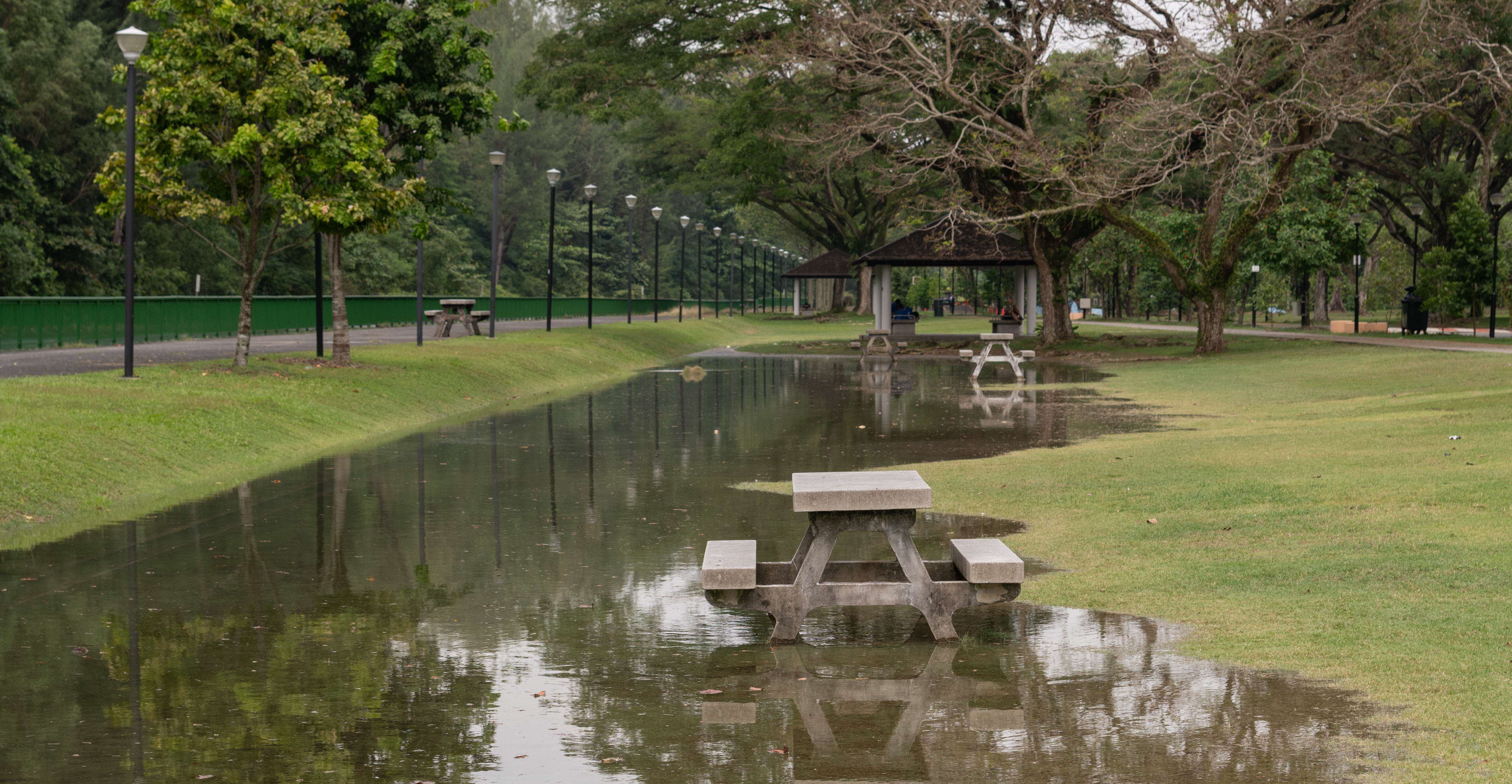
High tide at East Coast Park on a fair day in 2024, causing sea water to overflow the banks of a drain
Check out the list of Flood-Prone Areas (as of Nov 2025)
Check out the list of Hotspots in Singapore (as of Feb 2026)An era of more wet and dry extremes
Climate change poses new risks to Singapore. According to the Third National Climate Change Study, Singapore is expected to become warmer, with annual mean temperatures rising between 0.6 and 5 degrees Celsius by end century. There will also be more hot days and warm nights.Changing rainfall patterns
Rainfall patterns in general will also become more erratic. We expect to see longer dry spells, as well as more frequent and intense storms in the future. These weather extremes could affect Singapore adversely. For instance, our roads might flood more often during intense rains, disrupting travel. During long dry spells, our gardens and parks might turn brown.Rising sea levels
Mean sea levels around Singapore are projected to rise by 1.15m by end century. This is partially due to the warming and expansion of ocean water, as heat gets absorbed by the oceans. In addition, warmer temperatures accelerate melting of polar ice caps, further increasing sea levels worldwide.Flash floods
In most instances, our drains can cope with the rain. However, there could be times when extremely heavy rainfall over a short period could exceed our drains’ capacity. This is when flash floods – small and localised floods that typically do not last for more than an hour – may occur.Coastal floods
Singapore generally experiences two high tides per day. From time to time, Singapore may also experience storm surges, which is when an intense low pressure at the centre of a storm meets strong winds. These storm surges usually last three to five days and can raise sea levels at our shorelines. Such events could lead to coastal flooding and inundate low-lying coastal areas, even in the absence of rain.
Should there be a rare event where rising sea levels, storm surges, and/or high tides all occur at more or less the same time, water levels could rise by up to five metres. This could pose a serious threat to a small island like Singapore.
High tide at East Coast Park on a fair day in 2024, causing sea water to overflow the banks of a drain
