Official website links end with .gov.sg
A Singapore Government Agency Website


Secure websites use HTTPS


Singapore’s public sewerage system conveys used water to Water Reclamation Plants (WRPs). At the WRPs, micro-organisms help clean the water through biological treatment. The treated used water can then be:
• Further purified to produce NEWater.
• Safely released into the sea without harming the environment.
Trade premises that discharge trade effluent into the public sewerage system must first obtain a Written Approval (WA) from PUB. The WA sets out the conditions you must follow before discharging the trade effluent into the public sewerage system.
All trade effluent discharged into public sewers must meet the limits set out in the Sewerage, Drainage and Coastal Protection Act (SDCPA) and the Sewerage and Drainage (Trade Effluent) Regulations. If these limits are not followed, it can cause:
• Disruption to biological treatment process at WRPs.
• Disruption of NEWater production.
• Health and safety risks to workers maintaining the public sewerage system.
• Disruption of the smooth conveyance of used water in the public sewerage system.
The below figures illustrate examples of illegal discharges which have affected PUB’s WRP operations.
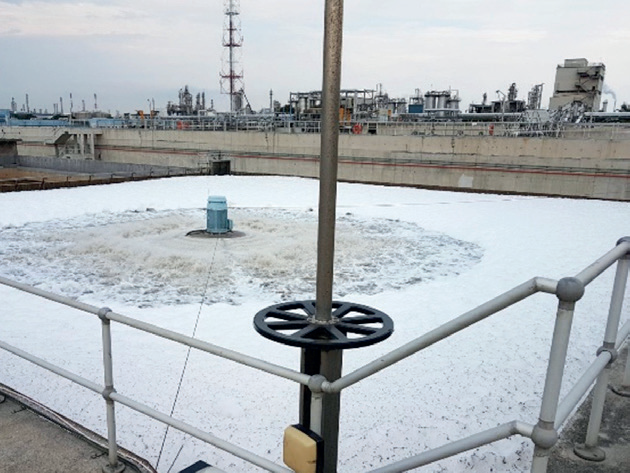
Aeration tank covered with “foam”. This can be caused by the illegal discharge of certain heavy metals, which inhibit the biological treatment process and the breakdown of detergents.
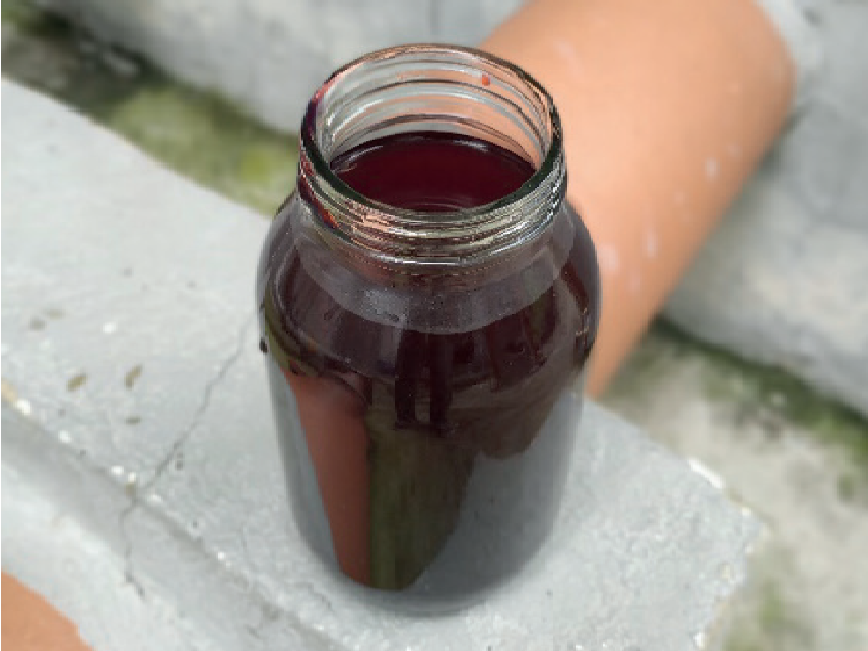
Raw sewage contaminated by remnants of partially degraded coloured dyes from trade effluent discharged by factories.
PUB administers both the Sewerage, Drainage and Coastal Protection Act (SDCPA) and the Sewerage and Drainage (Trade Effluent) Regulations [SD(TE)R].
• The SDCPA covers the provision, operation, and maintenance of Singapore’s public sewerage system.
• The SD(TE)R, together with the SDCPA, regulate how factories treat and discharge trade effluent (industrial wastewater) into the public sewerage system.
All trade effluent discharged into the public sewerage system shall comply with the requirements and discharge limits stipulated in the SD(TE)R at all times. You may refer to the Requirements for Discharge of Trade Effluent into the Public Sewerage System for the water quality parameters and their corresponding discharge limits as stipulated in the SD(TE)R.
Penalties For Discharging Non-Compliant Trade Effluent
For offences under items b), c) and d), the WA may be revoked.
|
S/N |
Action |
Offence Under |
|
(a) |
Discharged into public sewerage system without Board’s approval |
SDCPA |
|
(b) |
Nature of effluent did not comply with regulations |
SD(TE)R |
|
(c) |
Effluent contained prohibited substances |
SD(TE)R |
|
(d) |
Effluent contained certain substances more than the allowable limits |
SD(TE)R |
For the latest legislation, please visit the Singapore Statutes website at https://sso.agc.gov.sg.
PUB conducts regular review of hazardous organic compounds to ensure that water reclamation processes remain efficient and effective.
Trade premises are encouraged to review the raw materials and chemicals used in their processes to check if they contain those listed under the First Schedule of the Sewerage and Drainage (Trade Effluent) Regulation [SD(TE)R].
It is also recommended that trade premises test their trade effluent through third-party accredited laboratories to verify if these compounds are present. If detected, trade premises may consider measures such as:
• Upgrading wastewater treatment system, or
• Separating waste streams for off-site disposal by licensed waste collectors.
PUB seeks feedback from trade premises on:
a) How these compounds are used in your operations and whether suitable alternatives exist, and
b) How this proposed change might affect your operations, including any concerns or challenges you anticipate.
Please send your feedback or requests for clarification to [email protected].
The trade effluent samples collected for analysis should be representative of the treatment quality from the pre-treatment plant.
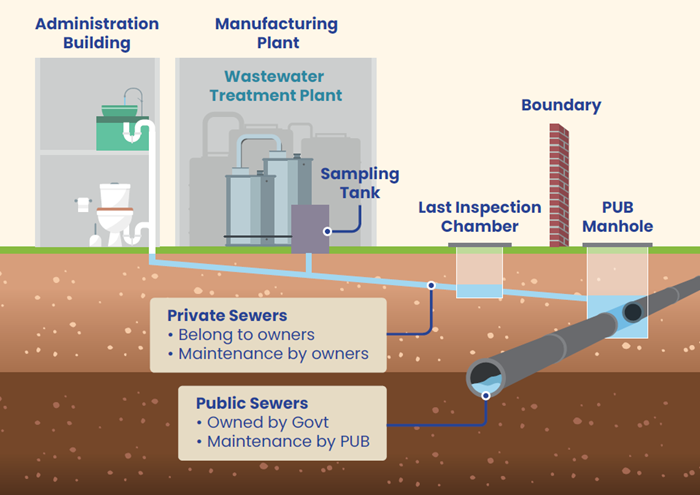
Samples must be taken from the sampling tank or sump of the pre-treatment plant (see figure above). The pollutants or parameters to test depend on the type of trade activity. In general, trade premises should test for:
• Biochemical Oxygen Demand (BOD)
• Chemical Oxygen Demand (COD)
• Total Suspended Solids (TSS)
These tests help assess the chemical and biological load of trade effluent. Trade premises should also test for specific water quality parameters relevant to their industry. For example, an electroplating facility that uses copper plating should test for heavy metals such as copper.
For the full list of parameters and discharge limits, please refer to the Requirements for Discharge of Trade Effluent into the Public Sewerage System.
Trade premises can send their samples to an accredited laboratory for analysis. For a list of accredited laboratories, please visit the Singapore Accreditation Council website at https://www.sac-accreditation.gov.sg.
Here are some practical and simple tips that trade premises can follow to avoid illegal discharge of trade effluent.
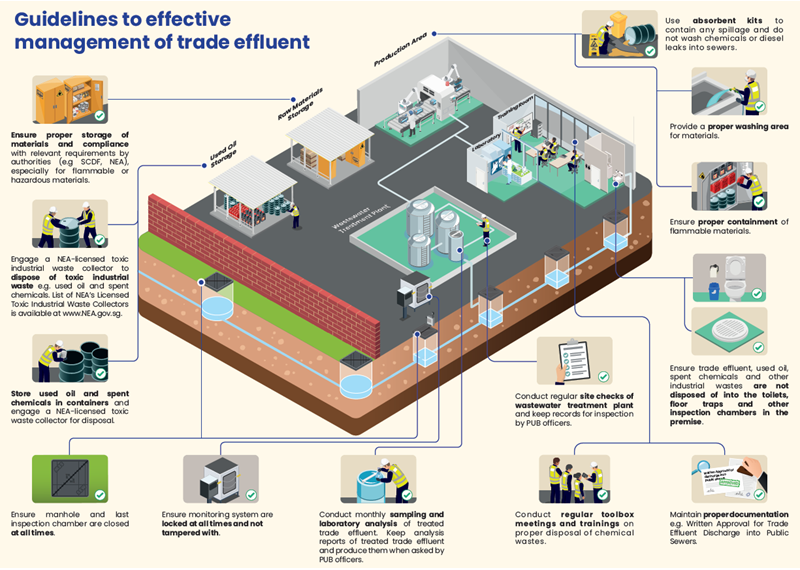
Housekeeping and Proper Storage of Chemicals
• Store and handle raw materials, wastes, chemicals, and fuels responsibly to prevent them from entering sanitary drain lines, floor traps, or sewers in your premises.
• Obtain Safety Data Sheets from chemical suppliers as it provides important information such as chemical composition and safe disposal methods.
• Use proper containment facilities (e.g., metal trays or bund walls) around storage areas to prevent leaks or spills into the sewer system.
• Store items like grease, paints, detergents, and metals in clearly labelled containers.
• Outdoor storage containers must have lids that are properly closed.
• Protect stockpiled materials from rain by keeping them indoors, under roofs, or covered with tarpaulins.
Process Monitoring
• Maintain an up-to-date sanitary drainage plan that clearly shows the locations and flows of all existing drains and sewers on your premises.
• Maintain pre-treatment plants and water quality sensors (if installed) to ensure they function properly.
• Clearly demarcate discharge points for spent solvents.
• Train workers to ensure proper collection and disposal by licensed waste collectors.
• Explore alternative materials or practices that can reduce effluent contamination.
Maintenance Work
• Carry out equipment and vehicle maintenance in designated or covered areas where used water can be collected and disposed of separately.
• Use drip pans to catch leaks or spills during maintenance.
• Dispose of collected liquids through licensed waste collectors.
Emergency Preparedness and Response
• Keep spill kits or absorbent materials (like granules or sawdust) near spill-risk areas and train employees on their location and use.
• Never wash spilled chemicals down drains - instead, clean spills with absorbent materials, paper wipes or rags, dispose of them as solid waste, and do not wash rags for reuse.
Educate Employees and Contractors
• Conduct regular briefings and in-house training for workers and contractors on proper procedures for handling, disposing and discharging of liquid wastes.
PUB administers both the Sewerage, Drainage and Coastal Protection Act (SDCPA) and the Sewerage and Drainage (Trade Effluent) Regulations [SD(TE)R].
• The SDCPA covers the provision, operation, and maintenance of Singapore’s public sewerage system.
• The SD(TE)R, together with the SDCPA, regulate how factories treat and discharge trade effluent (industrial wastewater) into the public sewerage system.
All trade effluent discharged into the public sewerage system shall comply with the requirements and discharge limits stipulated in the SD(TE)R at all times. You may refer to the Requirements for Discharge of Trade Effluent into the Public Sewerage System for the water quality parameters and their corresponding discharge limits as stipulated in the SD(TE)R.
Penalties For Discharging Non-Compliant Trade Effluent
For offences under items b), c) and d), the WA may be revoked.
|
S/N |
Action |
Offence Under |
|
(a) |
Discharged into public sewerage system without Board’s approval |
SDCPA |
|
(b) |
Nature of effluent did not comply with regulations |
SD(TE)R |
|
(c) |
Effluent contained prohibited substances |
SD(TE)R |
|
(d) |
Effluent contained certain substances more than the allowable limits |
SD(TE)R |
For the latest legislation, please visit the Singapore Statutes website at https://sso.agc.gov.sg.
PUB conducts regular review of hazardous organic compounds to ensure that water reclamation processes remain efficient and effective.
Trade premises are encouraged to review the raw materials and chemicals used in their processes to check if they contain those listed under the First Schedule of the Sewerage and Drainage (Trade Effluent) Regulation [SD(TE)R].
It is also recommended that trade premises test their trade effluent through third-party accredited laboratories to verify if these compounds are present. If detected, trade premises may consider measures such as:
• Upgrading wastewater treatment system, or
• Separating waste streams for off-site disposal by licensed waste collectors.
PUB seeks feedback from trade premises on:
a) How these compounds are used in your operations and whether suitable alternatives exist, and
b) How this proposed change might affect your operations, including any concerns or challenges you anticipate.
Please send your feedback or requests for clarification to [email protected].
The trade effluent samples collected for analysis should be representative of the treatment quality from the pre-treatment plant.
Samples must be taken from the sampling tank or sump of the pre-treatment plant (see figure above). The pollutants or parameters to test depend on the type of trade activity. In general, trade premises should test for:
• Biochemical Oxygen Demand (BOD)
• Chemical Oxygen Demand (COD)
• Total Suspended Solids (TSS)
These tests help assess the chemical and biological load of trade effluent. Trade premises should also test for specific water quality parameters relevant to their industry. For example, an electroplating facility that uses copper plating should test for heavy metals such as copper.
For the full list of parameters and discharge limits, please refer to the Requirements for Discharge of Trade Effluent into the Public Sewerage System.
Trade premises can send their samples to an accredited laboratory for analysis. For a list of accredited laboratories, please visit the Singapore Accreditation Council website at https://www.sac-accreditation.gov.sg.
Here are some practical and simple tips that trade premises can follow to avoid illegal discharge of trade effluent.
Housekeeping and Proper Storage of Chemicals
• Store and handle raw materials, wastes, chemicals, and fuels responsibly to prevent them from entering sanitary drain lines, floor traps, or sewers in your premises.
• Obtain Safety Data Sheets from chemical suppliers as it provides important information such as chemical composition and safe disposal methods.
• Use proper containment facilities (e.g., metal trays or bund walls) around storage areas to prevent leaks or spills into the sewer system.
• Store items like grease, paints, detergents, and metals in clearly labelled containers.
• Outdoor storage containers must have lids that are properly closed.
• Protect stockpiled materials from rain by keeping them indoors, under roofs, or covered with tarpaulins.
Process Monitoring
• Maintain an up-to-date sanitary drainage plan that clearly shows the locations and flows of all existing drains and sewers on your premises.
• Maintain pre-treatment plants and water quality sensors (if installed) to ensure they function properly.
• Clearly demarcate discharge points for spent solvents.
• Train workers to ensure proper collection and disposal by licensed waste collectors.
• Explore alternative materials or practices that can reduce effluent contamination.
Maintenance Work
• Carry out equipment and vehicle maintenance in designated or covered areas where used water can be collected and disposed of separately.
• Use drip pans to catch leaks or spills during maintenance.
• Dispose of collected liquids through licensed waste collectors.
Emergency Preparedness and Response
• Keep spill kits or absorbent materials (like granules or sawdust) near spill-risk areas and train employees on their location and use.
• Never wash spilled chemicals down drains - instead, clean spills with absorbent materials, paper wipes or rags, dispose of them as solid waste, and do not wash rags for reuse.
Educate Employees and Contractors
• Conduct regular briefings and in-house training for workers and contractors on proper procedures for handling, disposing and discharging of liquid wastes.
