Official website links end with .gov.sg
A Singapore Government Agency Website


Secure websites use HTTPS


Protecting Singapore's coastline from rising seas requires more than just building barriers. It demands a comprehensive strategy to ensure that our efforts are effective even in the face of future challenges. This is why we have adopted a 4-pronged approach for our coastal protection plans.
Even with comprehensive measures to ensure that Singapore remains flood-resilient, extreme weather conditions may still put us at risk. All of us should be ready to respond accordingly.
We can start today by signing up for flood alerts, learning what to do in a flood situation, and being prepared to take action to keep ourselves safe.
Establish a continuous line of defence
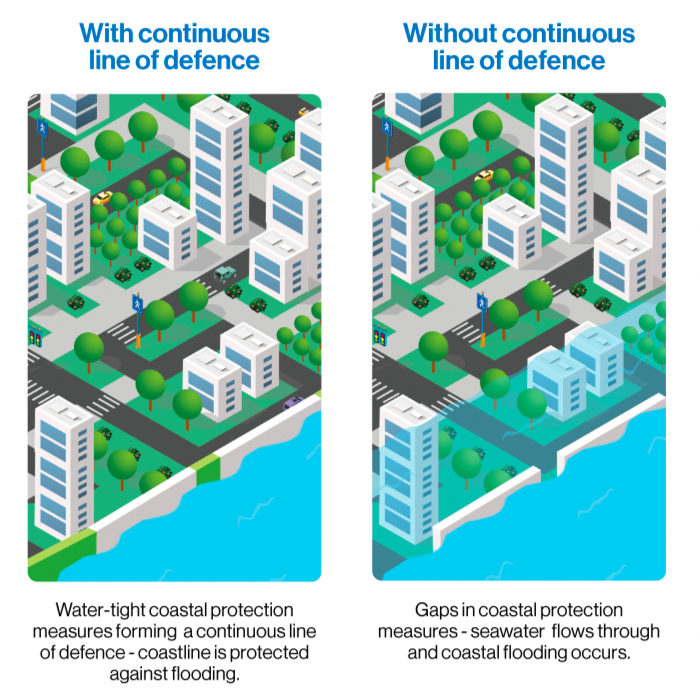
Each coastal zone requires protection measures that work together to effectively keep seawater out. We call this a continuous line of defence. Like a boat with even the tiniest breach, a small leak in our defence can become a serious problem.
Design adaptive solutions that evolve with rising sea levels
Climate change brings with it a host of new challenges that we need to remain adaptive to:
Currently, the precise rate of this rise is uncertain due to several factors including:
• The variability in future greenhouse gas emissions and what other countries are doing to cut their emissions, which will impact the future of climate change
• The behaviour of ice sheets and glaciers
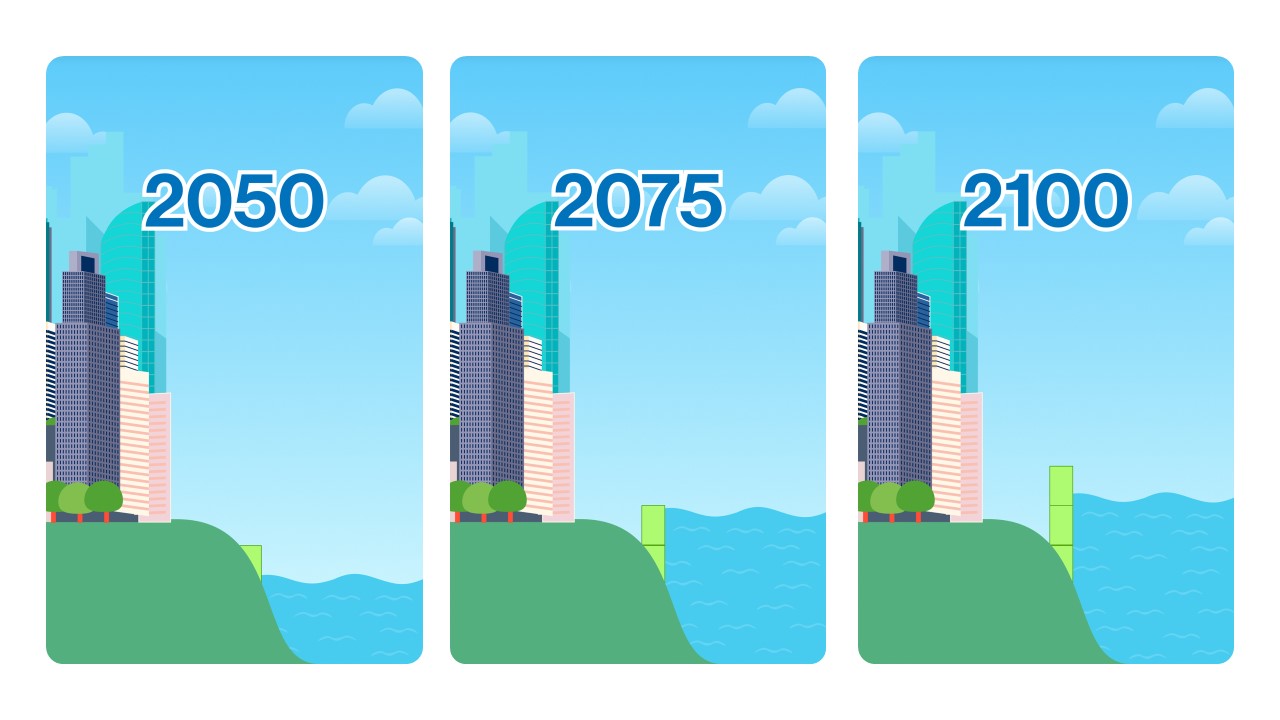
Therefore, we need to be flexible and creative in our approach. Adaptive plans are just like Lego blocks, we can build them layer by layer. As sea levels rise, we can raise our defences accordingly. By carefully monitoring sea level changes, we can plan and build these increments well in advance, before sea level catches up.
Integrate coastal protection measures with other uses
In land-scarce Singapore, we maximise every space through integrated planning. Rather than building simple seawalls, we design multi-functional coastal protection measures that serve multiple purposes. A waterfront park with an integrated coastal protection measure, for example, can protect against rising seas while providing recreation. This approach transforms single-use measures into valuable spaces that both safeguard our homes and enhance our quality of life.
Integrated planning in action
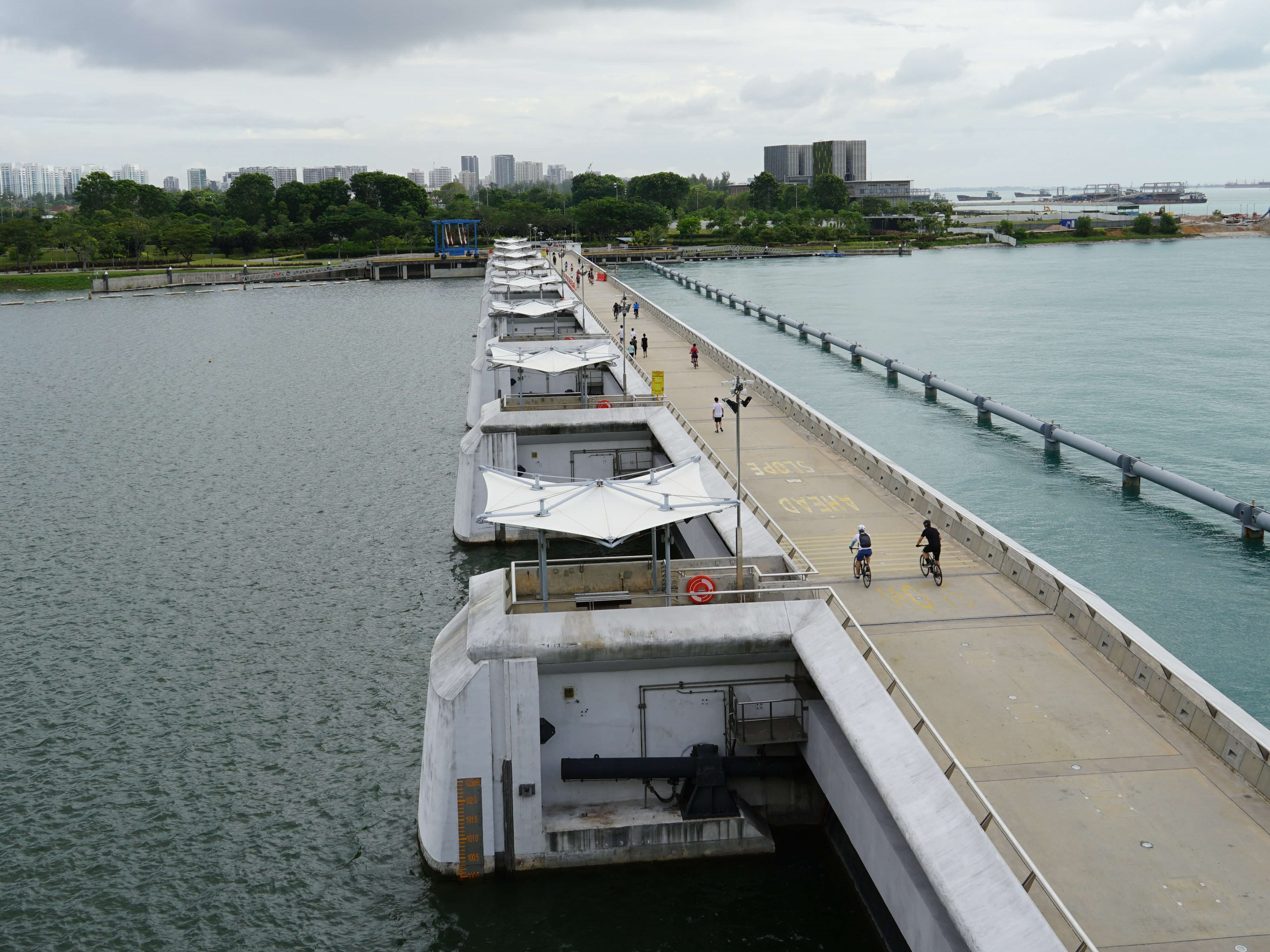
The Marina Barrage is a great example of a “3-in-1” landmark. The barrage is a flood control measure that keeps high tides out, alleviating flooding in the low-lying city areas. It also creates Singapore’s 15th reservoir, contributing to Singapore’s freshwater resource. In addition, the barrage is a popular destination for recreational activities like picnicking, kite flying, and cycling.
Multi-layer safety approach for contingencies
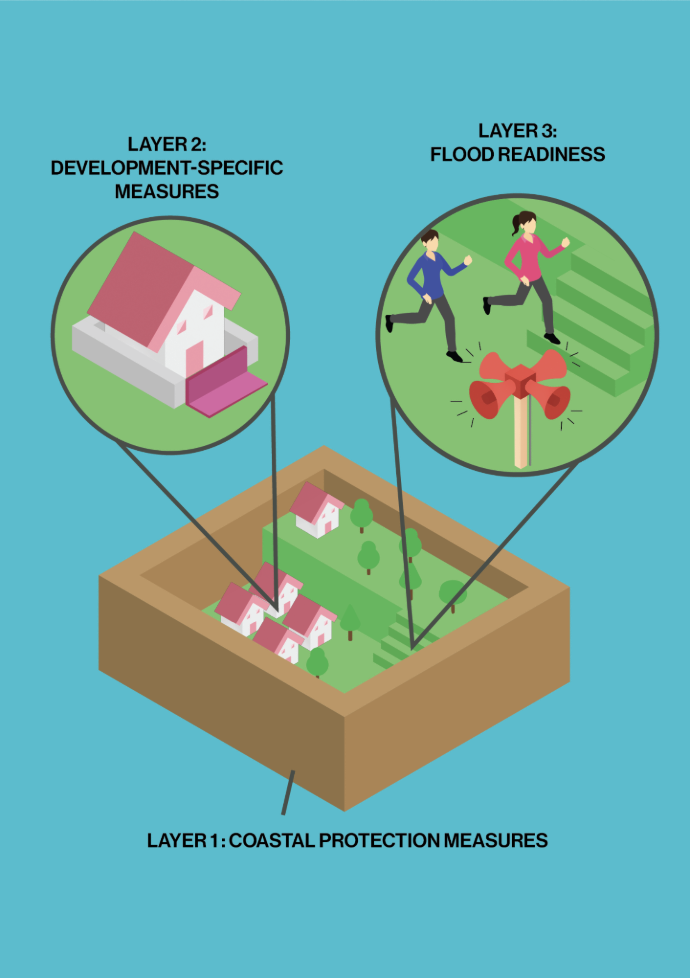
Just like how we wore our masks, washed our hands, and took vaccination jabs during the COVID-19 pandemic, we also need a multi-layered approach to protect Singapore against floods. This will ensure we’re fully prepared, should one layer fail.
So how does multi-layered protection work?
Layer 1: Coastal protection measures
Ensure coastal protection measures join up to form a continuous line of defence. This is the first layer of protection.
Layer 2: Development-specific measures
At the building level, developers and owners can enhance the flood resilience of their properties and assets. There are many ways to achieve this objective. For example, they can install flood barriers at entrances or elevate electrical systems. Property owners can enhance their developments' flood resilience by following the practical measures outlined in the Flood-Resilient Developments Guidebook.
Layer 3: Flood readiness
All of us should be ready to respond to flood risks. We can start today by signing up for flood alerts, learning what to do in a flood situation, and being prepared to take action to keep ourselves safe.
Everyone has a role to play in making Singapore more flood-resilient.
Establish a continuous line of defence
Each coastal zone requires protection measures that work together to effectively keep seawater out. We call this a continuous line of defence. Like a boat with even the tiniest breach, a small leak in our defence can become a serious problem.
Design adaptive solutions that evolve with rising sea levels
Climate change brings with it a host of new challenges that we need to remain adaptive to:
Currently, the precise rate of this rise is uncertain due to several factors including:
• The variability in future greenhouse gas emissions and what other countries are doing to cut their emissions, which will impact the future of climate change
• The behaviour of ice sheets and glaciers
Therefore, we need to be flexible and creative in our approach. Adaptive plans are just like Lego blocks, we can build them layer by layer. As sea levels rise, we can raise our defences accordingly. By carefully monitoring sea level changes, we can plan and build these increments well in advance, before sea level catches up.
Integrate coastal protection measures with other uses
In land-scarce Singapore, we maximise every space through integrated planning. Rather than building simple seawalls, we design multi-functional coastal protection measures that serve multiple purposes. A waterfront park with an integrated coastal protection measure, for example, can protect against rising seas while providing recreation. This approach transforms single-use measures into valuable spaces that both safeguard our homes and enhance our quality of life.
Integrated planning in action
The Marina Barrage is a great example of a “3-in-1” landmark. The barrage is a flood control measure that keeps high tides out, alleviating flooding in the low-lying city areas. It also creates Singapore’s 15th reservoir, contributing to Singapore’s freshwater resource. In addition, the barrage is a popular destination for recreational activities like picnicking, kite flying, and cycling.
Multi-layer safety approach for contingencies
Just like how we wore our masks, washed our hands, and took vaccination jabs during the COVID-19 pandemic, we also need a multi-layered approach to protect Singapore against floods. This will ensure we’re fully prepared, should one layer fail.
So how does multi-layered protection work?
Layer 1: Coastal protection measures
Ensure coastal protection measures join up to form a continuous line of defence. This is the first layer of protection.
Layer 2: Development-specific measures
At the building level, developers and owners can enhance the flood resilience of their properties and assets. There are many ways to achieve this objective. For example, they can install flood barriers at entrances or elevate electrical systems. Property owners can enhance their developments' flood resilience by following the practical measures outlined in the Flood-Resilient Developments Guidebook.
Layer 3: Flood readiness
All of us should be ready to respond to flood risks. We can start today by signing up for flood alerts, learning what to do in a flood situation, and being prepared to take action to keep ourselves safe.
Everyone has a role to play in making Singapore more flood-resilient.
Measures and activities are regulated through our coastal protection policies.
The PUB Coastal Protection Code of Practice (COP) provides a set of common design standards and Operation and Maintenance requirements to guide the design, construction, operation, and maintenance of coastal protection infrastructure. This would ensure that coastal protection infrastructure is designed and maintained to the required standards to protect Singapore in the long run.
To safeguard against the impact of sea level rise, since 2011, the minimum reclamation levels for newly reclaimed land and minimum platform levels for new developments have been raised from 3 metres to at least 4 metres above the mean sea level. New critical infrastructure such as Tuas Mega Port and Changi Airport Terminal 5 will be built at least 5 metres or more above the current mean sea level.
In our “Coastal Protectors” game, you’ll protect Singapore against rising sea levels up till 2100. Choose the best measures for each area based on time, budget, and effectiveness. Apply appropriate strategies to balance land use and flood risk.
Think you can keep Singapore dry? Try out the game here on desktop or tablet devices.